
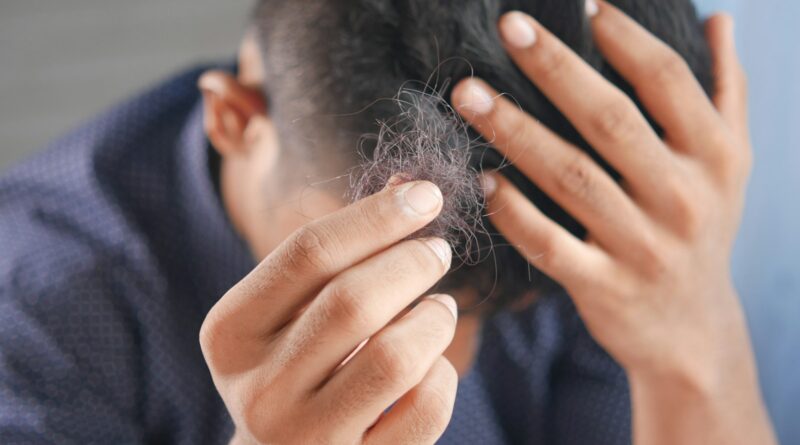
Hair Loss: Causes, Treatments and When to See a Doctor
Hair loss is common enough that most people will notice some change in thickness or hairline over a lifetime, and yet it is still one of the topics people research quietly rather than raise with a doctor. This is a plain overview of what tends to cause it, what usually helps, and when it is worth getting a professional opinion rather than working through it alone.
A useful starting point: losing some hair every day is normal. The NHS notes that we shed around 50 to 100 hairs a day, usually without noticing. What deserves attention is a change from your own normal: a widening part, a receding hairline, patches, or handfuls of hair in the shower that were not there before.
The most common pattern is hereditary
Androgenetic hair loss, usually called male or female pattern hair loss, accounts for the majority of cases. In men it typically shows at the temples and crown; in women it more often appears as a widening part and general thinning across the top, with the frontal hairline preserved. The American Academy of Dermatology describes female pattern hair loss as common, gradual and often inherited. It is not a sign of illness, and it tends to progress slowly over years rather than months.
Other causes worth ruling out
Many types of hair loss look similar at first, which is why a diagnosis matters more than a product. The AAD lists a wide range of causes, and the most common alternatives to the hereditary pattern are these:
- Telogen effluvium. A sudden, diffuse shed a few months after a physical or emotional shock: illness, surgery, childbirth, high fever, rapid weight loss. It is usually temporary and hair tends to regrow once the trigger has passed.
- Thyroid problems and iron deficiency. Both are common, both can be detected with a blood test, and both are treatable. The NHS lists hair loss among the possible symptoms of an underactive thyroid and of iron deficiency anaemia.
- Traction. Tight braids, extensions, weaves and repeated tension pull hair from the follicle. The AAD explains how certain hairstyles can cause this. Caught early it usually reverses; left long enough it can become permanent.
- Alopecia areata. Round, well-defined patches rather than general thinning. This is an autoimmune condition and needs a clinician to assess it.
- Medicines and treatments. Some medicines list hair loss as a side effect, and chemotherapy is the best-known example. Never stop a prescribed medicine on your own; ask the prescriber whether an alternative exists.
- Scarring alopecias. Less common conditions such as frontal fibrosing alopecia destroy the follicle, so the loss is permanent. Early treatment aims to stop progression, which is why an itchy, burning or shiny scalp should be seen promptly.
What actually helps
For pattern hair loss, the treatments with the strongest evidence are topical minoxidil and, for men, oral finasteride. Both are covered in the AAD overview of hair loss treatments. Two things are worth knowing before starting: they work while you use them and the benefit fades when you stop, and it usually takes several months before any change is visible. Neither restores hair from follicles that have been inactive for years. Finasteride is not suitable for women who are or may become pregnant, and any prescription treatment should be discussed with a doctor who knows your history.
Other options exist, from laser devices to platelet-rich plasma injections and hair transplant surgery. The evidence and cost vary widely between them. The NHS page on hair transplants is a sober read on what surgery involves and what it costs, and it is worth reading before any consultation that is also a sales meeting.
Nutrition matters, but only where there is a deficiency. Supplementing iron when your iron is normal does nothing for your hair, and too much iron can be harmful. If you suspect a deficiency, test rather than guess. Our section on dietary supplements covers that ground.
Gentler handling helps at the margins: less heat, less tension, and a wide-toothed comb rather than aggressive brushing on wet hair. The AAD has practical hair care tips along these lines. It will not reverse a hereditary pattern, but it stops you losing hair you did not have to lose.
What to be sceptical about
- Shampoos and serums that promise regrowth. Unless the active ingredient is one with evidence behind it, a cosmetic product can improve how hair looks without changing how much of it you have.
- Before and after photos. Lighting, angle, styling and a freshly cut fringe can do most of the work in a photo.
- Supplements sold for hair. Biotin in particular is widely marketed. The same rule applies as with iron: find out whether you are actually deficient before paying for a fix, and tell your doctor about any supplement you take before a blood test.
The emotional side is real
Hair loss can affect confidence and mood, and that is a legitimate reason to seek help, not vanity. The NHS page links to support organisations, and talking it through with a GP can open options, from treatment to counselling, that searching online alone will not.
When to see a doctor
Book an appointment if the shedding is sudden rather than gradual, if it comes in defined patches, if your scalp is sore, scaly, burning or itchy, or if it arrives alongside fatigue, weight change, feeling cold or irregular periods. Those combinations point at something systemic that is worth identifying early. Children with hair loss, and anyone whose hair loss started after a new medicine, should also be assessed. A GP can order blood tests and refer you to a dermatologist when needed.
This article is general information, not medical advice. Hair loss has many causes and the useful next step is usually a conversation with a doctor or dermatologist rather than a purchase.