Breast Cancer Prevention: What Lowers Your Risk and How Screening Helps
Breast cancer is one of the most common cancers in women worldwide, and it also affects a smaller number of men. No approach can guarantee that someone will not develop it. What the evidence does show is that some risk factors can be changed, that a few medical options exist for people at high risk, and that finding cancer early through screening and breast awareness makes treatment more likely to succeed. This article sets out what is known, with links to the cancer agencies that publish the detail.
Risk factors you cannot change
It helps to start with the factors that are outside anyone’s control, because they explain why breast cancer can occur in people with very healthy lifestyles. According to the CDC and the NHS, these include:
- Age. Risk rises with age, and most breast cancers are diagnosed after 50.
- Family history and genetics. Having close relatives with breast or ovarian cancer raises risk, and inherited changes in genes such as BRCA1 and BRCA2 raise it considerably.
- Reproductive history. Starting periods early or going through the menopause late means longer exposure to hormones.
- Dense breast tissue and some previous benign breast conditions.
- Previous radiotherapy to the chest, particularly at a young age.
Risk factors you can change
The US National Cancer Institute (NCI) identifies several protective factors, including being physically active, reducing or avoiding alcohol, maintaining a healthy weight and breastfeeding. Each is worth looking at in turn.
Alcohol
Alcohol is one of the clearest modifiable risk factors. The NCI’s alcohol and cancer fact sheet notes that women who have just one drink per day have a higher risk of breast cancer than those who have less than one drink a week, and that the risk increases further with heavy and binge drinking. Because breast cancer is common, even a small increase in relative risk translates into a meaningful number of cases across a population. There is no level of drinking that is known to be risk-free for breast cancer; less is better.
Physical activity
The CDC states that women who are not physically active have a higher risk of breast cancer, and the NCI lists regular exercise as a protective factor. General guidelines recommend at least 150 minutes of moderate activity a week, such as brisk walking, plus muscle strengthening on two days. Activity also helps with weight, which matters for the next point.
Weight after the menopause
Older women who are overweight or have obesity have a higher risk of breast cancer than those at a healthy weight, according to the CDC. After the menopause, most oestrogen is produced in fat tissue, which is one explanation for the link. Gradual, sustainable changes to diet and activity are more realistic than rapid weight loss.
Breastfeeding
Breastfeeding for several months after childbirth is associated with a lower risk. This is not something everyone can or chooses to do, and it is one factor among many rather than a reason for guilt.
Hormone therapy
Some forms of hormone replacement therapy (HRT) for menopausal symptoms, and some hormonal contraceptives, are linked with a small increase in breast cancer risk. For many women, HRT’s benefits for symptoms and bone health outweigh this. The right choice depends on your age, symptoms and personal risk, and it is a conversation to have with your doctor rather than a decision to make from a headline.
Options for people at high risk
If you have a strong family history or a known genetic mutation, a doctor may refer you to a specialist genetics or family history service. Options that may be discussed include earlier or more frequent screening, including MRI; medicines that lower risk, which the NCI describes as hormone therapies such as selective oestrogen receptor modulators (SERMs) and aromatase inhibitors; and, for a small number of people with very high risk, preventive surgery. The NCI notes that these medicines have serious side effects, and that the possible benefits and harms should be discussed with a doctor.
Screening: finding cancer early
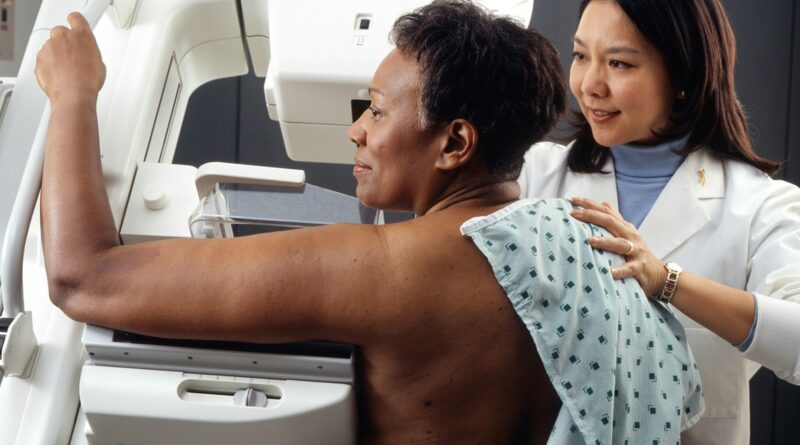
Screening cannot prevent breast cancer, but it can find it before symptoms appear, when treatment is often simpler and more successful. Recommendations vary by country:
| Programme | Who is invited | How often |
|---|---|---|
| NHS Breast Screening Programme (England) | Women aged 50 up to their 71st birthday | Every 3 years |
| US Preventive Services Task Force | Women aged 40 to 74 | Every other year |
Screening has limits. Mammograms can miss some cancers and can find changes that turn out not to be cancer, leading to further tests. They can also detect some slow-growing cancers that would never have caused harm. These trade-offs are why programmes set particular ages and intervals, and why people at higher risk may be offered a different schedule.
Breast awareness
Being breast aware simply means knowing how your breasts usually look and feel, so you notice changes. There is no special technique required. The NHS lists symptoms to get checked, including:
- a new lump or area of thickened tissue in the breast or armpit
- a change in the size or shape of a breast
- dimpling or puckering of the skin
- a change in the nipple, such as it becoming turned in, or a rash around it
- discharge from the nipple, particularly if it contains blood
- swelling in the armpit or around the collarbone
Most breast changes are not cancer. But it is always worth having them checked, whatever your age and whether or not you have recently had a normal mammogram.
When to see a doctor
See a doctor promptly if you notice any of the changes above, if you have a strong family history of breast or ovarian cancer and have never discussed it, or if you are considering HRT and want to understand your personal risk. Men should also get any breast lump or nipple change checked.
This article is general information, not medical advice. For questions about your own risk or screening, please speak to a doctor or breast specialist.